
Blog · Tree care advice
Tree Care Blog
Costs, permits, storm prep and species-specific care — written by the crew that does the work, for St. Petersburg homeowners deciding what to do about their trees.
Latest
Articles
No filler and no recycled listicles. These are the questions we get asked on estimates often enough that it was worth writing the answers down properly.
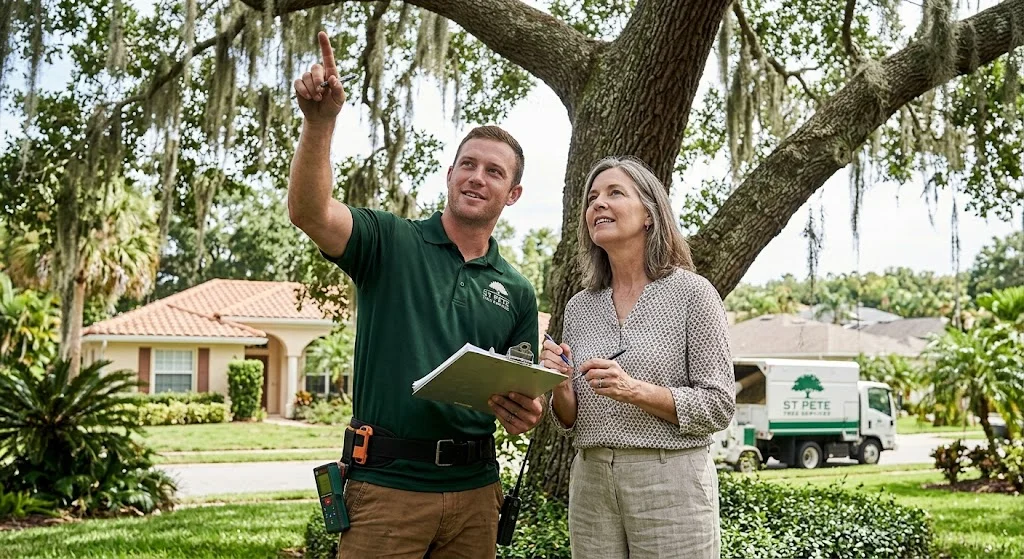
Do I Need a Permit to Remove a Tree in St. Petersburg?
How the city's specimen and grand tree rules work, which live oaks usually need a permit, and how we help pull one.
Read article →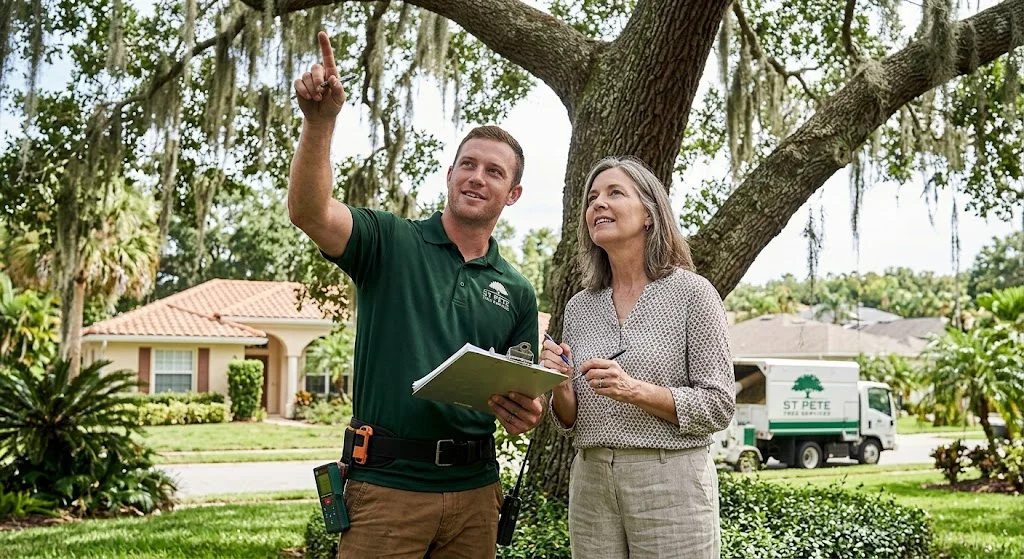
How Much Does Tree Removal Cost in St. Petersburg, FL?
Real per-size pricing for St. Pete tree removal and the six things that actually move your number.
Read article →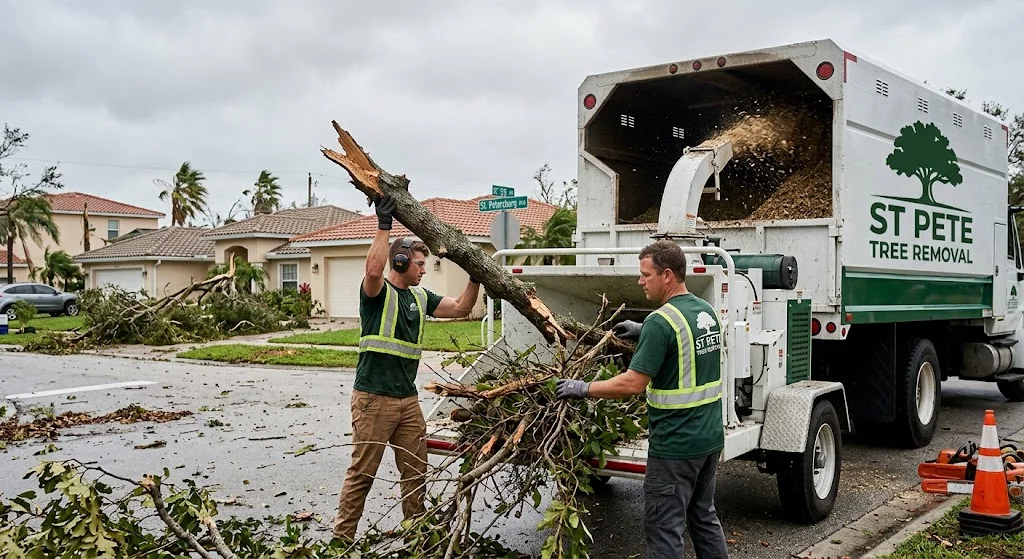
Hurricane Season Tree Prep: What to Do Before a Storm Hits Tampa Bay
What to trim, what to leave alone, and how to document damage for your insurance claim after the wind passes.
Read article →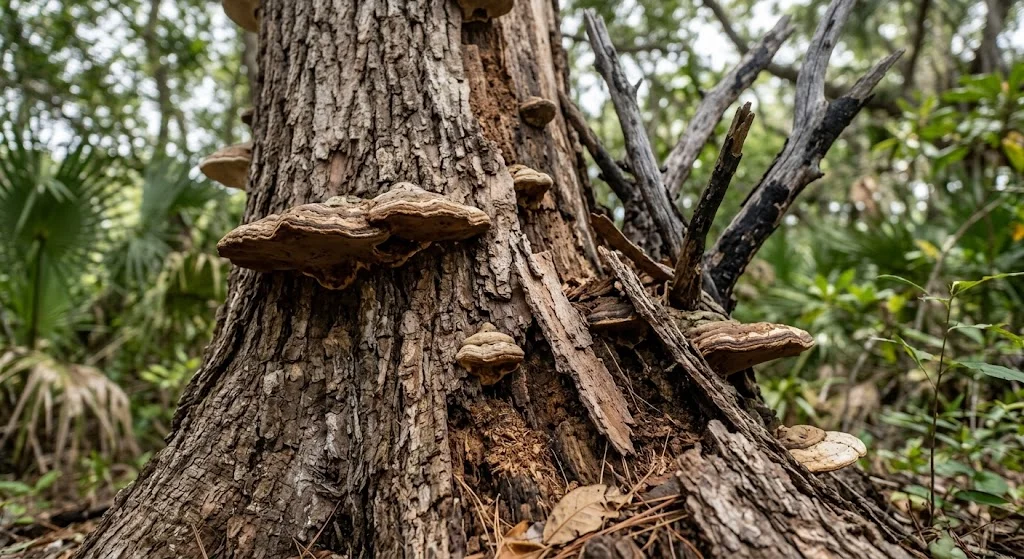
Signs a Tree Is Dying or Hazardous (and Needs to Come Down)
Eight warning signs — from fungus at the base to a sudden lean — that mean a tree is a real risk, not just ugly.
Read article →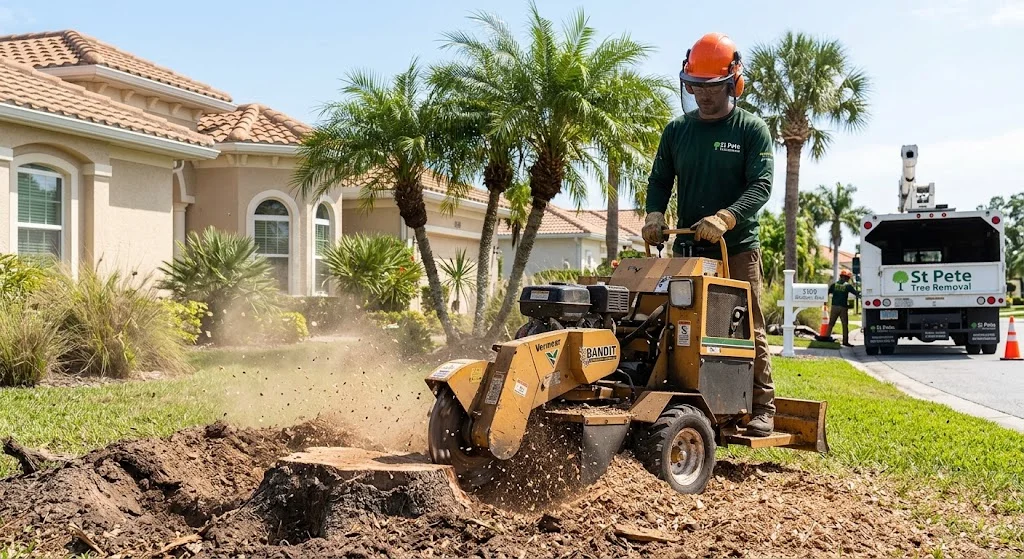
Stump Grinding vs. Stump Removal: Which Do You Need?
The real difference between grinding and full removal, what each costs in St. Pete, and how to decide.
Read article →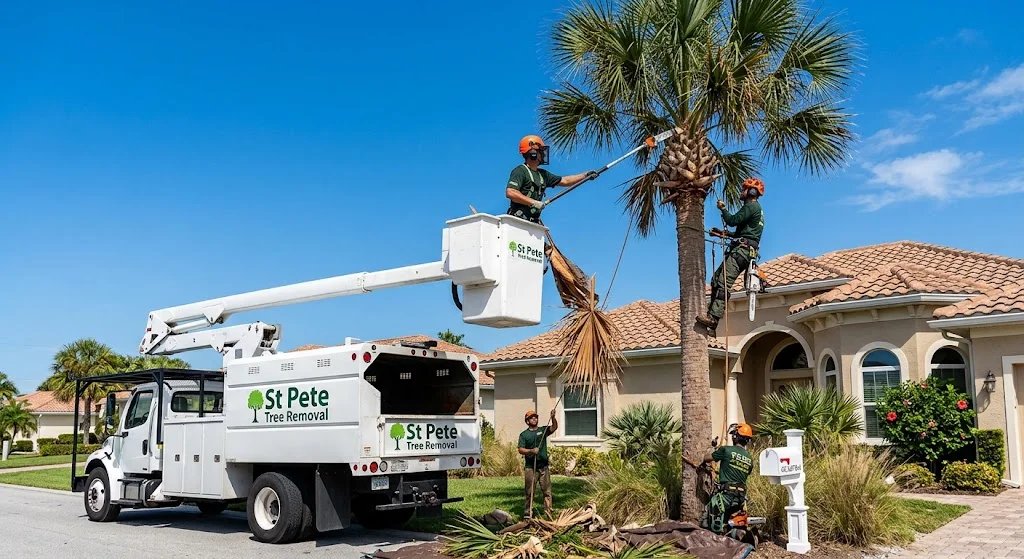
How Often Should Palm Trees Be Trimmed in Florida?
The right trimming interval by palm species, why over-trimming hurts more than it helps, and hurricane cuts explained.
Read article →Why we write these
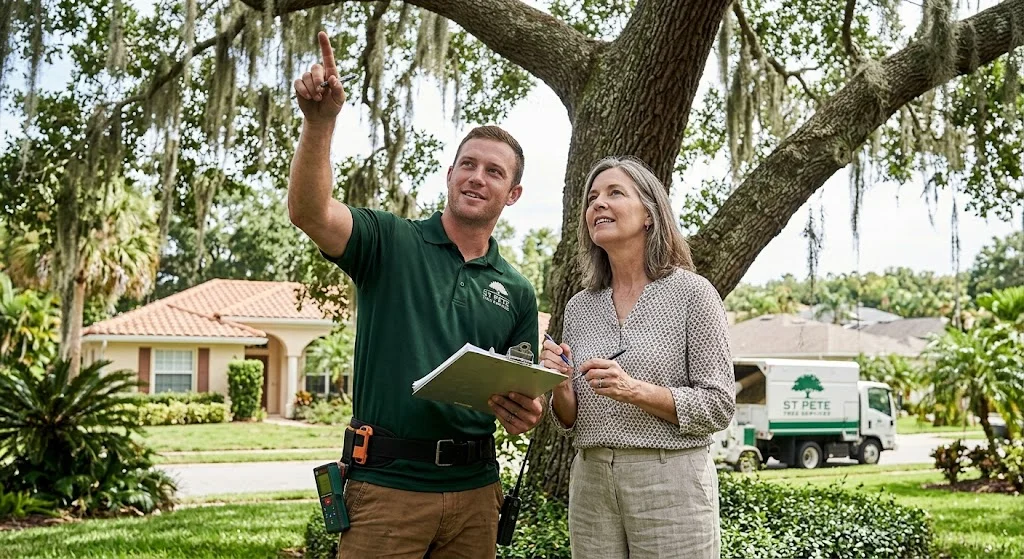
Tree removal is one of those trades where homeowners have almost no way to judge a quote. You have no idea whether $1,800 for a large oak removal is fair, whether your tree actually needs a city permit, or whether the guy telling you it's a specimen tree is being honest or just avoiding paperwork. That information gap is where people get taken advantage of.
So we publish the numbers. What tree removal actually costs in St. Petersburg, when the city's protected tree rules apply, and how to tell if a tree is actually hazardous rather than just ugly. If reading one of these convinces you that you do not need to hire anyone yet, that is a good outcome.
What we cover, and what we deliberately do not
We write about four things: what work costs, how the city's permit rules actually apply, how to tell when a tree needs to come down versus just needs trimming, and what to do before and after a storm. Those are the four subjects homeowners actually need help with, and they are the four where bad information is most expensive.
What we do not write is the filler that dominates this niche — the “ten benefits of trees” posts that exist to hold keywords and say nothing. If an article here does not contain at least one number you can act on, it should not be published.
Popular topics
Cost questions come up most, followed by permit questions and storm season prep. If you have a question we have not covered, call 727-624-0396 or send it through the contact page — the good ones become articles.
Who writes them
Working arborists, not a marketing agency. That matters because most of the useful detail in this trade is the kind you only learn by doing the work badly once, or by reading the city code closely enough to apply it correctly. Reading a lean, sizing a drop zone, the fact that over-trimming a palm weakens it more than leaving it alone — none of that appears in a product brochure, and all of it changes what you should ask for.
It also means we will occasionally tell you something that costs us a job. The article on signs a tree is actually hazardous exists partly to help homeowners work out that their tree has years left in it. That is a worse outcome for our schedule this month and a better one for the referral in three years, and we would make that trade every time.
Start here
If you are trying to work out whether a quote you have been given is fair, read the cost article first — it lists the questions that make two quotes genuinely comparable. If you have a large oak and are not sure about the rules, the permit guide covers how the city's specimen and grand tree rules work. And if it is hurricane season, the storm prep guide covers what to do, what to skip, and how to document damage so an insurance claim goes smoothly.
Questions
Tree care questions we get most
What a tree removal costs. Small trees run $300 to $800, medium trees $800 to $1,600, and large or mature trees $1,600 to $2,500 or more in the St. Petersburg area. The reason it comes up constantly is that almost nobody in this trade publishes prices, so homeowners have no reference point for judging a quote.
No. Most small and medium trees, and dead or hazardous trees generally, do not require a city permit. The rules specifically target certain large "specimen" and protected "grand" trees, most commonly mature live oaks, within city limits. We check status on every estimate and handle the paperwork when a permit applies.
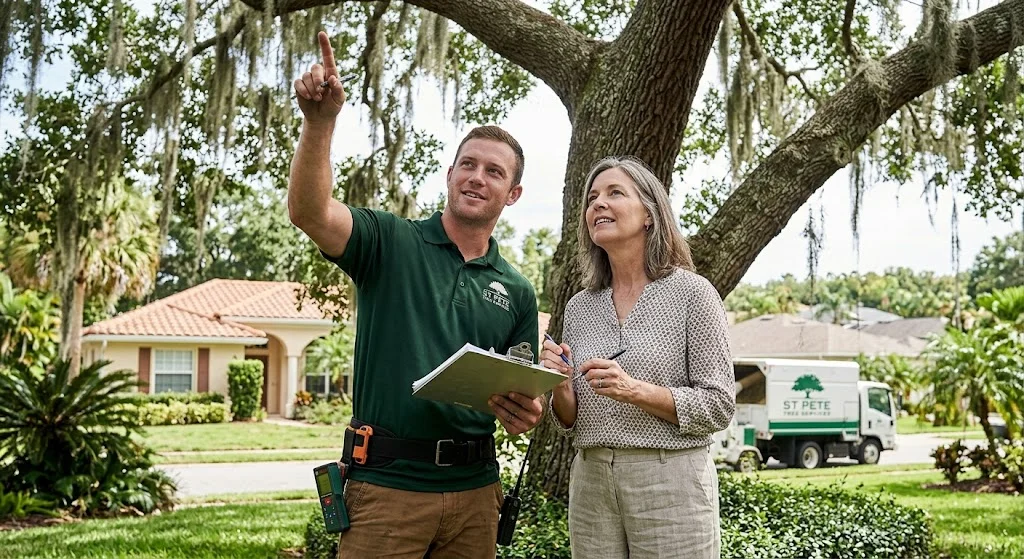
Look for a sudden lean, large dead limbs, fungus or mushrooms at the base, or a hollow sound when tapped. Any single sign often just means trimming or cabling is enough. Multiple signs together, especially near a structure, usually mean removal is the safer call. We give you an honest read at the estimate.
Live oaks in the older, established neighborhoods, sabal and queen palms near the beaches, and southern pines on larger inland lots. Each fails differently: oaks decay from the inside and respond well to cabling, palms get weakened by over-trimming rather than helped by it, and pines fail quickly once beetle-infested and rarely respond to bracing.
It varies, but a visibly split trunk, a newly exposed root plate, or a large hanging limb should be treated as an immediate hazard rather than something to monitor. Trees that look fine after a storm can still have hidden internal cracking, which is why we recommend an inspection after any named storm passes directly over your property.
Usually over-trimming. Removing green, healthy fronds rather than just dead ones — the aggressive "hurricane cut" look — actually reduces the palm's stored energy and can slow its recovery. A proper trim removes only dead and clearly declining fronds, once or twice a year.
Have dead wood and weak limbs removed while the weather is calm, since those are what typically fail first in high wind. Do not top healthy trees preemptively, since improper cuts create decay entry points and weaken the structure. After the storm, photograph everything before cleaning up, for insurance purposes.
For most homeowners, yes. An unground stump is a tripping hazard, attracts termites and fungus, and blocks replanting or resodding in that spot. Grinding it eight to twelve inches below grade runs $75 to $400 depending on diameter and is usually done at the same visit as the removal.
Yes, and the good questions become articles. If there is something you cannot find a straight answer to, call us or send it through the contact page. Most of what is on this blog started as a question someone asked us on an estimate.
Emergency and after-hours response typically carries a twenty-five to fifty percent premium over routine scheduling, reflecting the priority dispatch and sometimes more difficult conditions. For anything on a structure or blocking access, that premium is usually worth it rather than waiting for standard scheduling.
They can attempt to, but doing so on a protected specimen or grand tree without a permit can expose the property owner to city fines regardless of who did the cutting. We always check status first and would rather lose a same-day job than put a customer at that risk.
Waiting too long on a genuinely hazardous tree while over-managing healthy ones. A tree with a sudden lean or major dead wood near a structure needs attention now, while a tree that is simply large, old, or dropping normal seasonal debris usually needs nothing at all. Getting those two situations backwards is where both unnecessary cost and unnecessary risk come from.
Get your tree taken down right
Free on-site estimate, flat written price, and a crew that does nothing but trees. Tell us what needs to come down and we'll tell you what it costs.
Mon–Sat 7:00am–7:00pm (24/7 emergency line for storm work) · Licensed & insured · Serving St. Petersburg, Gulfport, Largo & the beaches