
Tampa Bay gets meaningful wind events most years, and St. Petersburg's tree canopy takes the brunt of it. Most healthy, well-maintained trees survive a normal storm season without major incident. The ones that fail are almost always carrying a pre-existing weakness — dead wood, a structural defect, root damage — that the storm exposed rather than caused outright.
Before the storm: what actually matters
Remove dead wood while the weather is calm
This is the single highest-value thing you can do, and it is far more effective done in May than the week before a named storm arrives. Dead and dying limbs are what typically fail first in high wind, and removing them ahead of time is routine trimming work that costs far less than dealing with the aftermath of one falling on a roof.
Have questionable trees inspected
A tree with a visible lean, a co-dominant trunk, or a history of dropping large limbs is worth a proper assessment before hurricane season rather than during it. Cabling and bracing can meaningfully reduce the risk on a structurally weak but otherwise healthy tree, and it is far easier to schedule calmly in the spring than urgently after a forecast turns serious.
Clear loose yard debris and furniture
Anything loose in the yard — furniture, planters, unsecured decorations — becomes windborne debris in a serious storm and can itself cause damage to trees, structures, or vehicles. This is not tree work specifically, but it is part of a complete pre-storm checklist and directly affects how much cleanup is needed afterward.
Do not top healthy trees preemptively
Cutting a healthy tree's main branches back to stubs does not meaningfully reduce storm risk and creates large wounds that invite decay, along with weak regrowth that is more likely to fail in future wind events, not less. If a tree is genuinely a concern, proper structural pruning or removal are the right tools — not topping.
What not to do
- Do not remove healthy trees preemptively out of general worry. A well-structured, healthy tree is an asset in a storm, providing wind buffering, not primarily a liability.
- Do not attempt large removals yourself right before a storm. This is when tree work injuries spike, from inexperienced homeowners rushing against a forecast.
- Do not ignore a tree that has been dropping unusually large limbs. That pattern often indicates a structural issue worth assessing before, not after, a storm tests it.
After the storm: order of operations
1. Make it safe, then stop
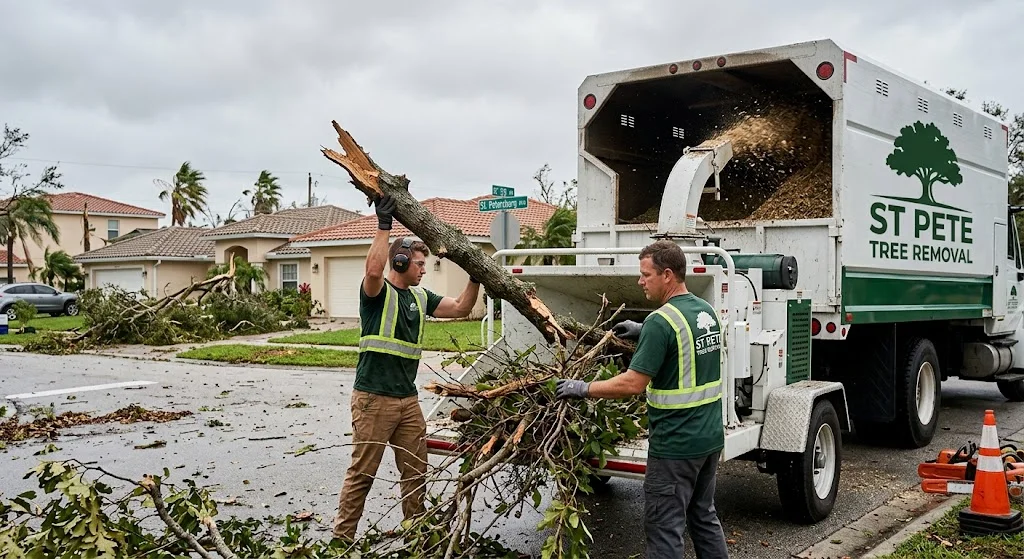
Secure anything dangerous and keep people and pets away from compromised trees or hanging limbs. Then stop, and specifically do not start cutting up debris yourself if there is any visible property damage.
2. Photograph everything before cleanup
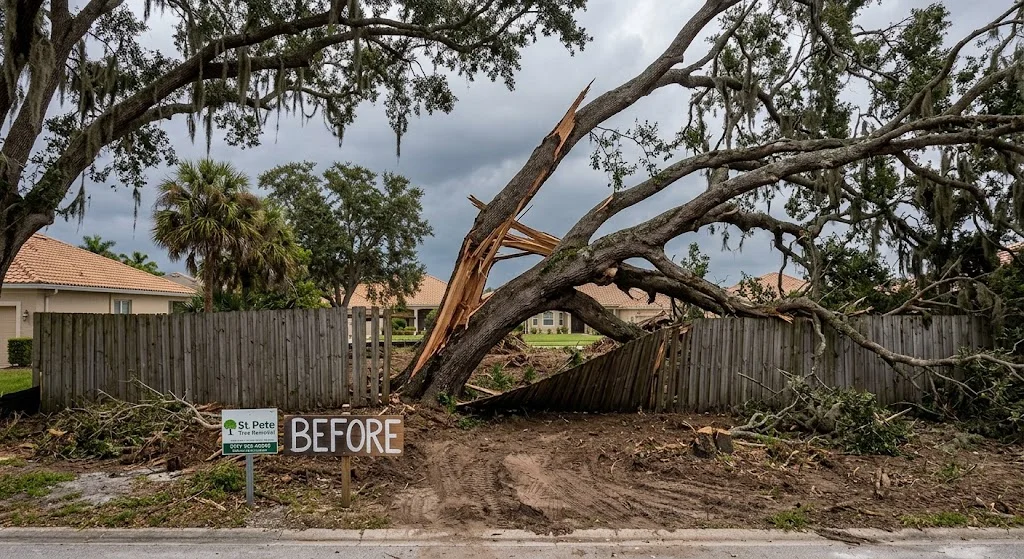
This is the most common and most expensive mistake homeowners make after a storm. Clearing debris before documenting it removes the evidence an insurance adjuster needs, and can meaningfully weaken a claim. Take wide shots of the property and close-ups of any structural damage before anything is moved.
3. Call for hazards first, cosmetic cleanup second
A tree resting on a structure or blocking your only access is a genuine emergency — see our emergency tree removal line, which runs 24/7. Scattered limbs and general yard debris, while frustrating to look at, can typically wait a few days and are handled under storm and yard debris removal.
Neighborhoods with the most storm exposure
Waterfront communities like Shore Acres and barrier island communities like St. Pete Beach see meaningfully more direct wind exposure than inland neighborhoods, and we run priority scheduling in those areas specifically because storm-related calls concentrate there after a named system passes through.
A note on scheduling honesty
After a named storm, every tree company in Tampa Bay is oversubscribed and lead times stretch across the board. We triage by severity rather than by who called first — a tree on a roof is seen before scattered debris regardless of geography. Calling early gets you into the queue at the right position.