Service · St. Petersburg, FL
Palm Tree Trimming in St. Petersburg
Frond removal, careful hurricane-prep cuts and disease-boot trimming for sabal, queen and other palms common along the St. Petersburg beaches and inland yards.
Palm Tree Trimming Services in St. Petersburg & St. Pete Beach, FL
Palms are not small trees, and treating them like one is the single most common mistake in this business. A palm's trunk does not add new wood the way an oak's does — every frond it grows contributes stored energy the palm draws on later, and every frond removed while still green is energy the palm does not get back. Lawn crews and unlicensed operators frequently over-trim palms into a bare, "pineapple" look on a quarterly schedule because it looks tidy and it is quick work. It is also measurably bad for the palm.
We trim palms less often than most companies suggest, and remove less per visit. The goal is removing dead and clearly declining fronds — brown, drooping below roughly nine and three o'clock — and leaving healthy green fronds in place regardless of how "neat" the result looks by comparison to a hurricane-cut neighbor. Sabal palms, Florida's state tree and the most common palm on St. Pete Beach and Treasure Island properties, are especially sensitive to over-trimming, since their crown is more vulnerable to boring insects once stressed.
What we do on a palm trimming visit
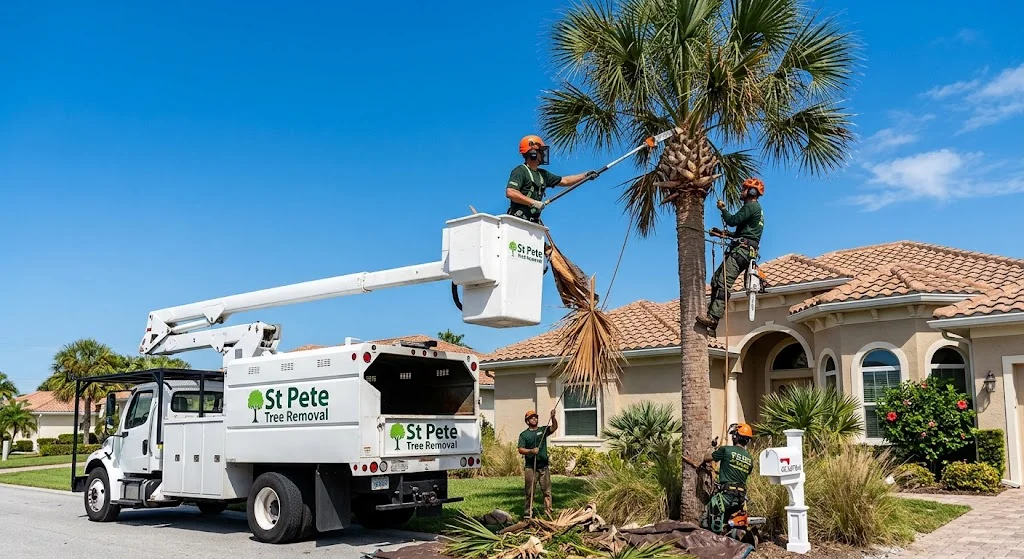
- Dead and declining frond removal — brown and clearly dying fronds cut close to the trunk without damaging the trunk itself.
- Seed pod and flower stalk removal — heavy fruiting stalks that are a mess hazard and a minor storm risk if left too long.
- Disease-boot trimming — old frond bases ("boots") that harbor pests and disease removed carefully rather than ripped off.
- Crown cleaning — clearing debris and old fiber from the crown that can hold moisture and invite rot.
- Height and clearance work — keeping fronds clear of rooflines, power lines and walkways.
- Species-appropriate approach — sabal, queen, Canary Island date and other common local species are trimmed differently based on their growth habit.
What palm trimming costs
Standard palms run $75 to $250 per tree depending on height and the number of fronds. Tall palms over thirty feet, common as accent trees on larger St. Pete Beach and Snell Isle lots, run $150 to $400 given the climbing or lift equipment required. Multiple palms on the same property are typically discounted since the equipment and setup cost is shared.
| Job | Typical range | What moves the price |
|---|---|---|
| Standard palm, under 20 ft | $75 – $150 | Frond count and species |
| Medium palm, 20–30 ft | $125 – $250 | Height and access |
| Tall palm, 30 ft+ | $150 – $400 | Climbing or lift equipment required |
| Multiple palms, same visit | 10–20% off per additional palm | Shared setup and equipment |
| Full palm removal | $200 – $900 | Height and whether crane-assisted |
The "hurricane cut" myth
A true hurricane cut — trimming a palm down to a small tuft of fronds right before a storm — is one of the more persistent bad practices in Florida landscaping. It does not meaningfully reduce wind damage to the palm, since palm crowns are naturally aerodynamic and flex with wind rather than catching it the way a broad hardwood canopy does. What it does do is remove energy-producing fronds the palm needs, leaving it visibly weaker and slower to recover afterward. We do not perform hurricane cuts and will explain why if you ask for one.
Disease and pest signs we watch for
Ganoderma butt rot, lethal bronzing and various palm weevils are present in the Tampa Bay area and can be difficult to spot until a palm is well into decline. We check the crown, trunk base and frond bases for early warning signs during every trim — irregular new growth, a conk (shelf fungus) at the trunk base, or unusual frond discoloration — and flag anything concerning rather than just trimming around it.
When a palm needs to come down instead
Some palm problems are not fixable with trimming. Ganoderma butt rot in particular is fatal and untreatable once present, and a palm with a confirmed diagnosis needs to be removed before it becomes a fall hazard, since decayed palm trunks can fail with very little warning. See tree removal for pricing on palm removal.
Where we trim palms
Heaviest demand along the water and the beaches — St. Pete Beach, Treasure Island, Snell Isle and Skyway Marina District — but available everywhere across our service area.
Questions
Palm Tree Trimming FAQs
Standard palms run $75 to $250 per tree depending on height and frond count. Tall palms over thirty feet run $150 to $400 given the climbing or lift equipment required. Multiple palms on the same property are usually discounted since setup and equipment costs are shared across the visit.
Once or twice a year for most sabal and queen palms, removing only dead and clearly declining fronds. More frequent trimming, especially removing green fronds, weakens the palm rather than protecting it. Our full breakdown by species is in the palm trimming frequency guide on our blog.
A hurricane cut trims a palm down to a small tuft of remaining fronds before a storm, based on the belief that it reduces wind damage. It does not meaningfully reduce damage, since palm crowns are naturally wind-flexible, and it removes fronds the palm needs for energy, leaving it visibly weaker. We do not perform them and can explain the reasoning if you've been told otherwise.
Normal aging is the most common cause — every frond eventually browns and droops as the palm redirects energy to newer growth, typically once a frond hangs below roughly the nine or three o'clock position relative to the trunk. That is exactly the point where it is appropriate to remove it. Widespread yellowing or unusual patterns can indicate nutrient deficiency or disease, which we'll flag if we see it.
Yes, significantly. Removing green, healthy fronds takes stored energy the palm cannot recover, stresses the crown, and can leave the palm more vulnerable to pests like palm weevils that target stressed trees. A palm trimmed too often or too aggressively over several years often shows a visibly thin, stressed crown compared to one trimmed conservatively.
It's a fungal disease that decays the base of a palm trunk from the inside, identifiable by a shelf-like conk that eventually appears at the base. There is no effective treatment or cure once a palm is infected, and an infected palm should be removed before the trunk fails, since decayed palm trunks can come down with very little warning.
We trim sabal, queen, Canary Island date, pygmy date and most other palm species common in the St. Petersburg area. Trimming technique and frequency vary by species — Canary Island date palms in particular need a different, more conservative approach than sabals due to their growth pattern.
Yes, most mature palms produce large flowering and fruiting stalks seasonally, which can be heavy and messy but are not usually a safety concern on their own. We remove them as part of a standard trim if requested, mainly for cleanliness rather than necessity.
Most crews handle palms up to roughly thirty-five to forty feet using proper climbing spikes and safety gear. Taller palms, or ones in tight access spots, sometimes need a bucket lift instead of climbing, which we'll account for in the quote if your palm is on the taller end.
Yes — removing genuinely dead and loose fronds ahead of storm season reduces the amount of debris that can become windborne, without the drawbacks of an aggressive hurricane cut. This is a normal, conservative trim done at a useful time of year rather than a different technique.
We haul off all trimmed material as part of the standard price. Fronds are bulky but not particularly heavy, and cleanup is quick — most single-palm visits are finished, trimmed and cleaned up, within thirty to sixty minutes.
When the decline is disease-related — particularly Ganoderma butt rot — rather than simple frond aging. Warning signs include a conk at the trunk base, a crown that looks thin and stressed despite conservative trimming, or new growth that looks stunted or discolored. We'll tell you plainly if trimming is no longer the right answer.
Related
Other tree work we do
Get a price for your palm tree trimming
Free on-site estimate with a flat written price before we start. Call or send photos and we will tell you what it costs.
Mon–Sat 7:00am–7:00pm (24/7 emergency line for storm work) · Licensed & insured · Serving St. Petersburg, Gulfport, Largo & the beaches