
This question comes up on nearly every tree removal we do, and the honest answer for most homeowners is grinding rather than removal — but the reasons matter, and there are genuine situations where full removal is the right call. Understanding the difference before you decide saves you from paying for more than you need, or worse, doing less than your project actually requires.
What each one actually does
| Item | Detail |
|---|---|
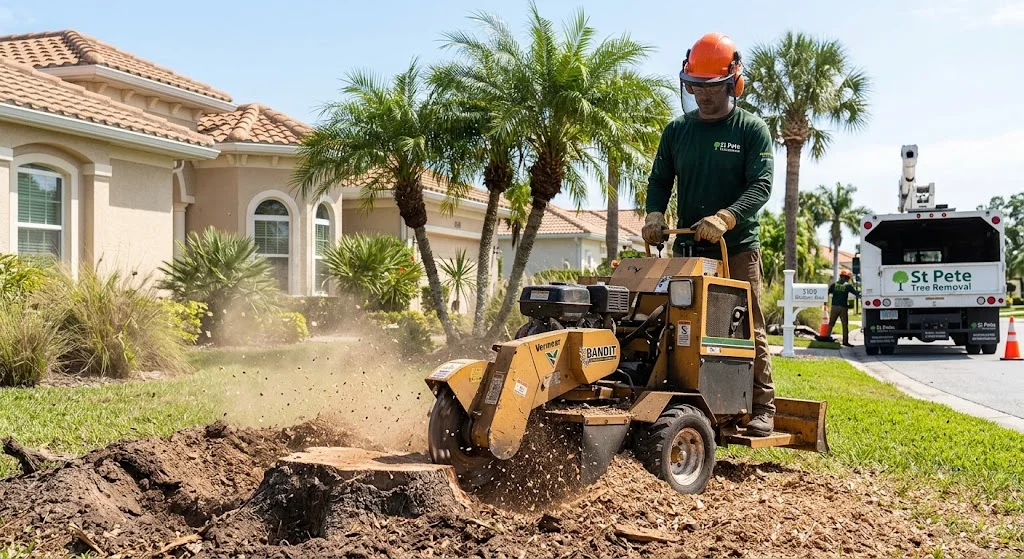
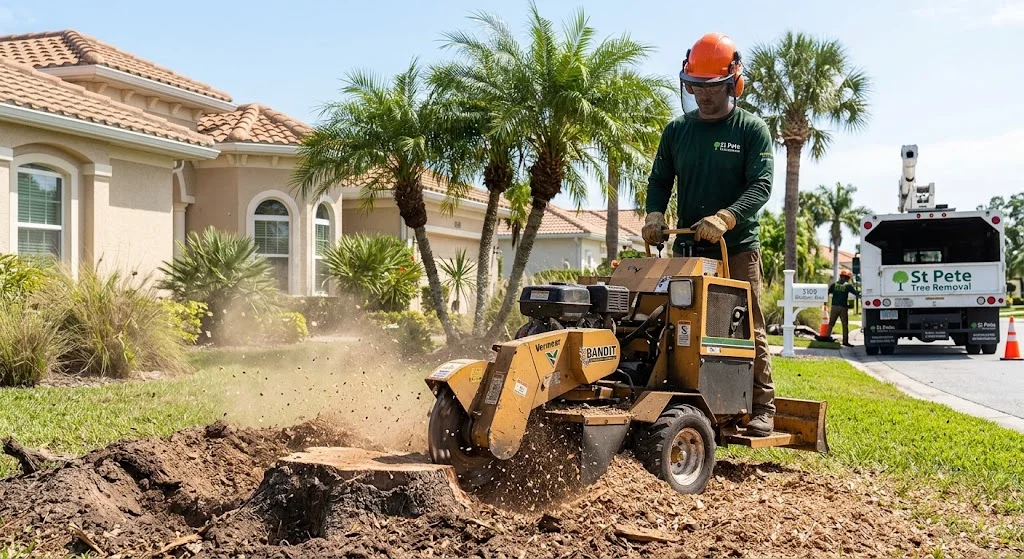
| Stump grinding | Mills the stump and upper roots into chips, 8–12 inches below grade. Root system below that stays in the ground and decomposes naturally over years. |
| Stump removal | Extracts the entire stump and major root mass from the ground, leaving a hole that must be backfilled. No wood or major roots remain in the immediate area. |
When grinding is the right answer
- You want to plant grass or resod — grinding below grade and topping with soil is sufficient for shallow-rooted lawn.
- You want the eyesore and tripping hazard gone quickly — grinding is typically a same-day job.
- You are on a budget — grinding runs $75 to $400 per stump versus $300 to $900+ for full removal.
- You are not building or digging in that exact spot — the remaining below-grade root system does not interfere with normal yard use.
- You want usable mulch — grinding produces wood chips you can spread elsewhere in the yard.
When full removal is the right answer
- You are planning to build in that exact location — a shed, a pool, a foundation, or anything requiring excavation needs the roots genuinely gone.
- You want to plant a new tree in the identical spot — a large replacement tree's root system can struggle with old decomposing wood and channels left by the previous roots.
- The stump is causing a specific drainage or structural problem — occasionally roots have grown into or under something that requires full excavation to resolve properly.
- You are doing broader land clearing ahead of construction — full removal across a site is often part of preparing genuinely buildable ground.
What each option costs in St. Petersburg
| Item | Detail |
|---|---|
| Stump grinding, small (under 12") | $75 – $150 |
| Stump grinding, medium (12"–24") | $150 – $275 |
| Stump grinding, large (24"+) | $275 – $400 |
| Full stump & root-ball removal | $300 – $900 |
| Hole backfill (part of removal) | Included in removal price |
What happens to the ground afterward
After grinding, we typically top the area with a few inches of soil so it is ready for grass seed or sod immediately, rather than settling unevenly over the following months as the ground chips compact. After full removal, the resulting hole is backfilled with soil, though some settling over the following weeks is normal as the loose fill compacts, and a second small top-off is sometimes worthwhile a month or two later.
Termites and decay: does it matter which you choose?
An unground stump left to decompose naturally is a somewhat more attractive termite entry point than either ground or fully removed wood, since the intact mass decomposes slowly and stays a viable food source longer. Both grinding and full removal reduce that risk meaningfully compared to doing nothing, though full removal eliminates it most completely since no wood mass remains at all.
Our honest recommendation
For the overwhelming majority of homeowners — someone who just had a tree removed and wants the yard usable again — grinding is the right call. It is faster, cheaper, and sufficient for anything short of building or planting a large tree in the exact same spot. We will tell you plainly if your specific plans call for full removal instead, and pricing for both is on our stump grinding page.